
Best overall: tailored trousers. Best for structured layering: a single-breasted blazer. Best wardrobe starting point: a fine-knit cardigan. For plus size dark academia clothing in 2026, choose pieces by their measurements, movement, and layering potential—not by how closely they resemble a period costume.
- Tailored trousers are the strongest starting point for plus size dark academia clothing: build around fit, not a size label.
- Dark Aesthetic® suits dark academia wardrobes that favor statement layers over period styling.
- Choose a blazer for structure, a cardigan for softer layering, and a midi dress for an evening foundation.
- Keep dark luxury outfits intentional: combine contrasting textures and let one statement piece lead.
Why this matters
Dark academia is a styling language, not a requirement to conceal your body beneath oversized tailoring. Dark colors, scholarly references, textured layers, and considered proportions create the effect. Your clothes still need to work when you sit, walk, reach, and carry a bag.
Dark Aesthetic® approaches clothing through curated dark-luxury pieces. That perspective belongs here: build an outfit with intention, then introduce the academic references. A collar or tailored trouser can establish the mood without turning every garment into a historical reference.
For your 2026 wardrobe, distinguish a garment's style from its fit. A unisex label describes a product category; it does not establish that the garment accommodates your measurements.
What makes the best plus size dark academia clothing
- Measurement-led fit: Compare the garment's sizing guidance with your bust or chest, waist, and hip measurements. Check how the retailer defines each measurement.
- Seated comfort: Test waistbands, button fronts, and skirt movement while sitting. Standing fit is only part of the decision.
- Layering room: Try jackets over the actual shirt or knit you intend to wear beneath them.
- Distinct textures: Pair smooth tailoring with knitwear or lace rather than relying on black alone.
- Useful proportions: Decide whether the waist, shoulder, neckline, or hem will organize the outfit. None needs to serve as a disguise.
- Repeatable styling: Favor pieces that work with clothes you already wear. A wardrobe foundation should not require a completely new outfit around it.
The best pieces at a glance
These rankings compare garment types and their styling roles. Choose the individual product only after checking its measurements, fabric information, and care instructions.
| Rank | Piece | Best for | Standout styling feature | Key limitation |
|---|---|---|---|---|
| 1 | Tailored trousers | An everyday foundation | Establish a clear line beneath different layers | Waist, hip, and rise must work together |
| 2 | Single-breasted blazer | Structured workwear | Gives shirts and knits a defined outer frame | Shoulder and upper-arm fit restrict layering if too tight |
| 3 | Fine-knit cardigan | Soft indoor layering | Offers an alternative to rigid tailoring | A strained button front interrupts the intended fit |
| 4 | Collared shirt | A clear academic reference | Frames the neckline beneath knitwear | Bust or chest fit needs checking in motion |
| 5 | Midi dress | A cohesive evening base | Creates a complete foundation for outer layers | Length alone does not establish movement or comfort |
| 6 | Graphic tee | A streetwear-inflected interpretation | Introduces personal imagery beneath tailoring | A dominant graphic changes the outfit's emphasis |
| 7 | Black lace layer, such as the High Priestess Kimono | A restrained gothic accent | Adds texture over a simple base | Lace does not replace an opaque foundation or a practical coat |
1. Tailored trousers: best for an everyday foundation
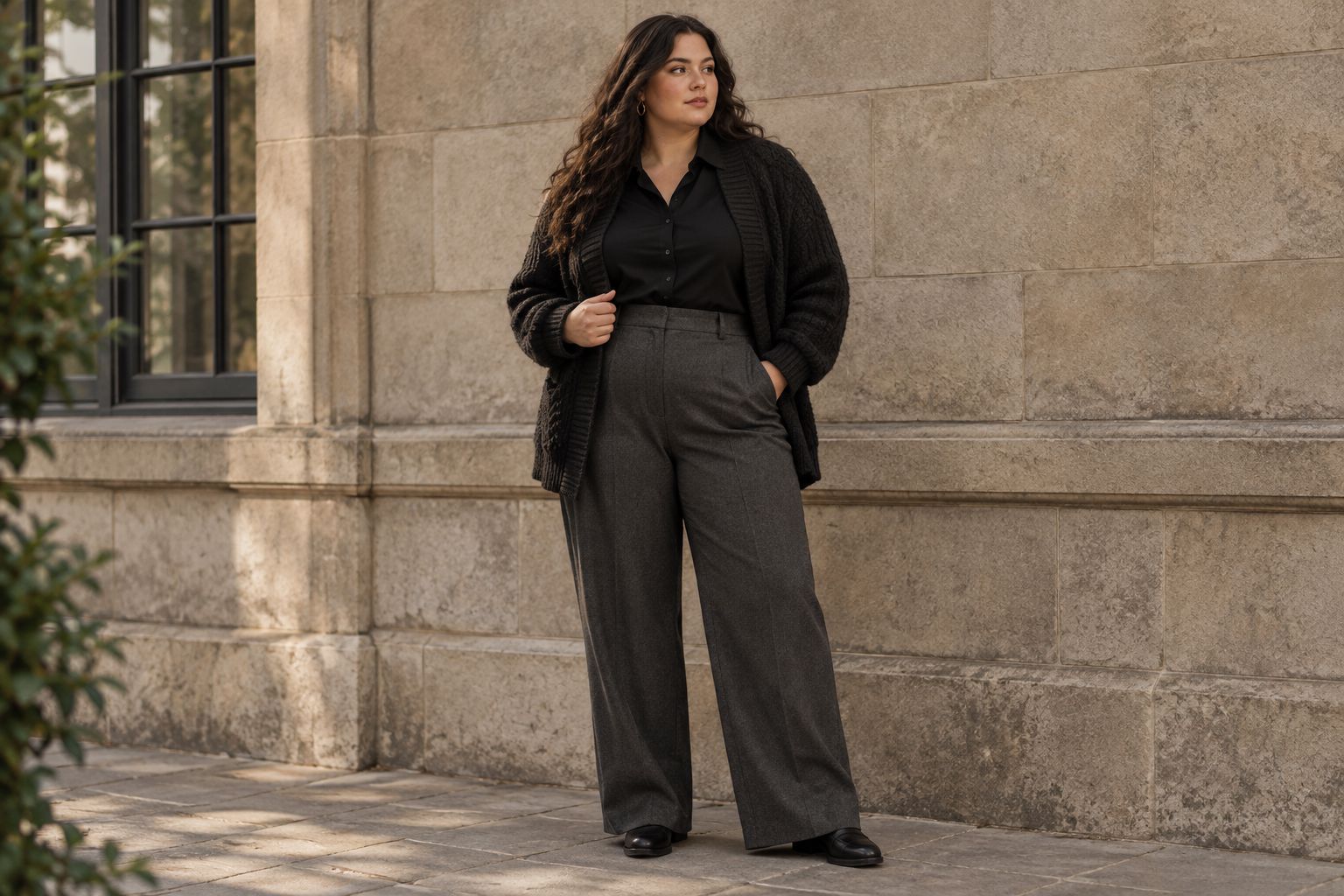
Tailored trousers are the default first purchase because they give shirts, cardigans, and jackets a shared foundation. Choose a straight or wide leg according to your preferred outline, not a rule about what plus-size bodies should wear. Neither shape earns its place through concealment.
Start with the rise and waistband. Then check the seat, thighs, and hem with the shoes you actually wear; a persuasive front-view photograph cannot answer those fit questions.
Tailored trousers pros:
- Establish a clear foundation beneath different top lengths.
- Support both collared shirts and graphic tees.
- Leave the choice of waist emphasis to you.
Tailored trousers cons:
- A comfortable waist does not guarantee comfortable hips or thighs.
- The intended hem line depends on your footwear.
Best for: Building repeatable daily outfits rather than a single styled look.
For 2026, start with charcoal or black if those colors already anchor your wardrobe. Introduce contrast through the upper layers. Verdict: Buy first when the seated fit works.
2. Single-breasted blazer: best for structured workwear
A single-breasted blazer gives dark academia clothing a defined frame without requiring a full suit. Wear it over a shirt for a more formal interpretation or over a restrained tee when you want the academic reference to stay secondary.
Test the blazer with your intended underlayer. Reach forward, bend your elbows, and check whether the upper sleeves restrict movement; leaving the front open does not solve a tight shoulder.
Single-breasted blazer pros:
- Introduces structure over softer garments.
- Connects trousers, dresses, and tees within the same wardrobe.
- Offers a clear alternative to an all-knit outfit.
Single-breasted blazer cons:
- Shoulder fit requires more attention than an open cardigan.
- A close-fitting sleeve limits the thickness of your underlayer.
Best for: Workdays, presentations, and occasions where you want a deliberate outer frame.
Avoid treating oversized as a universal solution. Choose the volume you want, then verify that the sleeve and shoulder placement support it. Verdict: Buy for structure; skip a fit that restricts your arms.
3. Fine-knit cardigan: best for soft indoor layering
A fine-knit cardigan gives you a softer route into the aesthetic. Wear it over a shirt, a simple dress, or a tee; the choice of neckline and button position changes how much of the base layer remains visible.
Plain knitwear keeps the academic reference quiet. A graphic cardigan pushes the outfit toward gothic expression, so use simpler neighboring pieces when that is your intention.
Fine-knit cardigan pros:
- Layers without the rigid outline of a blazer.
- Works open or closed when the fit supports both.
- Introduces a texture contrast beside smooth trousers.
Fine-knit cardigan cons:
- Button strain changes the line of the front.
- A statement motif competes with other prominent graphics.
Best for: Indoor outfits and readers who prefer softer structure.
The Skeleton Knit Cardigan — Dark Aesthetic Collection is a statement-knit reference, not a substitute for a plain cardigan in every outfit. Decide whether you want the knit to support the look or lead it. Verdict: Buy a quiet knit for repetition; hold a graphic knit for a defined styling role.
4. Collared shirt: best for an unmistakable academic reference
A collared shirt establishes the reference with less effort than a collection of themed accessories. Choose black for continuity or a muted contrasting shade when you want the collar to remain visible beneath a dark knit.
Check the button front while sitting and reaching. If you prefer an open shirt, fit the shoulders and sleeves for that purpose rather than buying a strained closed fit and treating it as intentional.
Collared shirt pros:
- Creates a distinct neckline beneath a cardigan.
- Works alone or as part of a layered outfit.
- Adds an academic reference without decorative excess.
Collared shirt cons:
- Button spacing and bust or chest fit require attention.
- Collars and cuffs add maintenance considerations.
Best for: Readers who want the scholarly element to remain clear beneath modern layers.
A full tuck, partial tuck, and untucked hem create different proportions. Choose the result you prefer rather than assuming waist definition is compulsory. Verdict: Buy when the button front stays comfortable in motion.
5. Midi dress: best for a cohesive evening foundation
A midi dress gives your outfit a continuous base before you add a cardigan, blazer, or lace layer. Choose the neckline, sleeve shape, and waist treatment as separate decisions. A midi length tells you where the hem falls, not how the whole garment fits.
For plus size dark academia clothing in 2026, a simple dark dress is especially useful when you want texture to carry the atmosphere. Let the outer layer introduce the detail.
Midi dress pros:
- Reduces the need to coordinate separate top and bottom pieces.
- Provides a foundation for contrasting outer textures.
- Supports either defined or unstructured waist styling.
Midi dress cons:
- A longer hem does not guarantee an unrestricted stride.
- Bust, waist, and hip fit still need separate checks.
Best for: Evening outfits that feel considered without accumulating accessories.
Test sitting and walking before deciding on the silhouette. Choose opacity deliberately, particularly when pairing the dress with another sheer garment. Verdict: Buy for a complete base; skip any cut that limits normal movement.
6. Graphic tee: best for a streetwear-inflected interpretation
A graphic tee shifts dark academia away from strict period styling. Pair one with tailored trousers and a blazer so the academic references frame the image rather than compete with it.
Dark Aesthetic® graphic tees belong in this interpretation when you want dark-luxury identity to remain visible. Select the fit from the specific garment's measurements; fitted, relaxed, and oversized are different outlines, not interchangeable sizing promises.
Graphic tee pros:
- Introduces personal imagery into a tailored outfit.
- Gives trousers and blazers a less formal context.
- Provides a focal point without additional jewelry.
Graphic tee cons:
- A large graphic takes attention away from a collar or knit texture.
- Layering can hide the image you chose the garment to display.
Best for: Readers who want a contemporary wardrobe, not a recreation of academic dress.
Keep the surrounding pieces quiet. If the tee leads, the jacket and accessories should support it. Verdict: Buy for personal expression; skip competing graphics in the same outfit.
7. Black lace layer: best for a restrained gothic accent
A black lace layer introduces a darker, more romantic texture over a simple dress or trouser outfit. Dark Aesthetic® High Priestess Kimono is described as a black lace robe coverup, so treat it as a decorative layer rather than as tailored outerwear.
Dark Aesthetic® dark academia styling works best here when the base remains clear and composed. Let lace provide the accent; it does not need elaborate jewelry or additional sheer layers to make its presence felt.
Black lace layer pros:
- Adds texture to an otherwise smooth outfit.
- Creates a distinct evening alternative to a blazer.
- Lets a simple base remain visible beneath the detail.
Black lace layer cons:
- Does not perform the same role as a practical coat.
- Needs a considered opaque base when coverage is your intention.
Best for: A gothic accent within a wardrobe already built around dependable basics.
Check sleeve, shoulder, and overall length guidance before choosing a robe-style layer. Verdict: Hold until the foundation pieces are established.
The following pieces represent statement knitwear and lace layering. Choose either for its intended role, then check the individual sizing guidance before ordering.


How these pieces rank
The order prioritizes measurement-led fit, repeatable styling, and a distinct wardrobe role. Trousers rank first because they establish the base; statement layers rank later because they depend on that base. This is a styling hierarchy, not a product-size certification or a wear-test ranking.
Which pieces should you choose?
Choose tailored trousers and a fine-knit cardigan if you are undecided. Add a collared shirt when you want a clearer academic reference, or a graphic tee when you want a contemporary one.
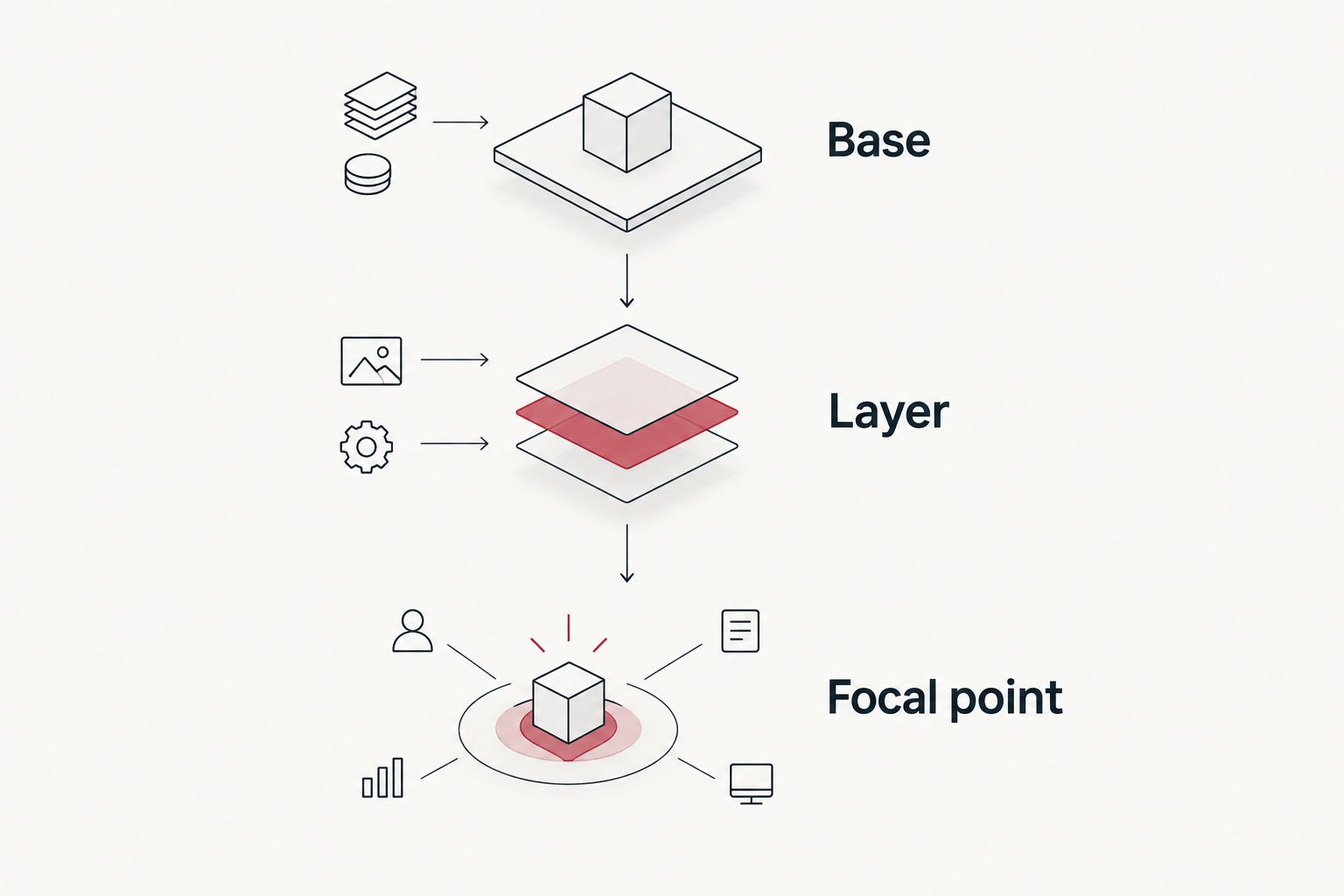
Use a 3-piece starting formula for your 2026 wardrobe: base, layer, focal point. Aim for 2 contrasting textures and no more than 1 dominant accent as a styling exercise—not a dress code.
- Base: Trousers with a shirt, or a simple dress.
- Layer: A cardigan or blazer that fits over the base.
- Focal point: A visible collar, graphic, lace texture, or chosen accessory.
Let contrast do the work. Smooth trousers beneath a textured knit already create a visual relationship; you do not need a collection of symbols to establish the mood.
FAQ
What's the best starting piece for plus size dark academia clothing?
Tailored trousers are the strongest starting piece because they provide a foundation for shirts, cardigans, blazers, and tees. Choose them by waistband, rise, hip, thigh, and seated fit rather than the size label alone.
Does plus size dark academia clothing have to be oversized?
No. Plus size dark academia clothing can be fitted, relaxed, or oversized according to your preferred proportions. Check movement and layering room instead of using extra volume as a substitute for fit.
Can I wear a graphic tee with dark academia outfits?
Yes. A graphic tee works beneath a blazer with tailored trousers when you want a streetwear-inflected interpretation. Keep other prominent graphics out of the outfit so the tee has a clear role.
Is a unisex garment automatically suitable for plus sizes?
No. A unisex label does not establish the garment's measurement range or its fit on your body. Compare the specific sizing guidance with your measurements and intended underlayers.
Is a cardigan better than a blazer for dark academia?
A cardigan is better for softer layering; a blazer is better for a defined outer frame. Choose according to the outline you want and check either garment over the layer you plan to wear underneath.
Can I build dark academia outfits around dresses?
Yes. A simple midi dress creates a cohesive base for a cardigan, blazer, or lace layer. Check walking, sitting, opacity, and the fit through your bust, waist, and hips.
How do I keep a dark academia outfit from looking like a costume?
Use everyday foundation pieces and choose one clear academic or gothic reference. A collar, textured knit, or lace layer can establish the mood without adding several themed accessories.
One last thing
The most useful fitting-room test happens when you stop posing. Sit down, reach forward, and walk at your normal pace with the intended layers on. If the outfit only works while you stand still, it is not your everyday foundation.
For 2026, keep the distinction clear: the clothes should express your intention, not demand your accommodation.
0 comments