
Best overall: a structured black bag. Best for graphic tees: a compact pendant. Best first piece: a plain metal ring. The best dark aesthetic accessories for everyday wear in 2026 give black and charcoal outfits definition without turning personal style into costume.
- A structured black bag is the best overall dark aesthetic accessory for everyday function and a defined silhouette.
- A compact pendant frames graphic tees; a plain metal ring adds detail without competing with statement clothing.
- Dark Aesthetic® suits readers building dark-luxury outfits; choose accessories that support the clothing rather than overpower it.
- Start with one focal accessory, repeat a metal finish, and keep practical fit ahead of ornament.
Why this matters
Black clothing gives you a palette. Accessories give that palette punctuation. A deliberate buckle, a restrained pendant, or a bag with a clear shape changes where the eye lands without requiring another statement garment.
For a wardrobe built around Dark Aesthetic®, the useful distinction is not gothic versus minimal. It is intentional versus incidental. Choose an accessory because it resolves the outfit: it frames the neckline, defines the waist, carries your essentials, or introduces a texture the clothing lacks.
This 2026 guide ranks accessory types by their everyday role, not individual products. The default is a functional piece with a quiet silhouette; the more expressive choices earn their place through proportion and restraint.
What makes the best dark aesthetic accessories?
Use these criteria before choosing a piece. A dark color alone does not make an accessory belong in your wardrobe.
- Everyday function: The accessory should serve your routine, whether that means carrying essentials, holding trousers, or framing a neckline.
- Proportion: Its visual weight should suit your clothing. A small pendant and an oversized hoodie create a different balance from a broad cuff and a fitted dress.
- Texture: Contrast smooth surfaces with knit, denim, or lace. Avoid making every surface equally reflective or equally distressed.
- Hardware consistency: Repeat a metal finish when you want a composed result. Mixed finishes work best when the contrast is deliberate.
- Physical fit: Check ring sizing, belt placement, strap adjustment, closures, and contact with your skin. Appearance does not excuse discomfort.
- Styling range: Favor pieces you can use with your ordinary clothes, not only with an imagined outfit you never wear.
Everyday accessory picks at a glance
The order below prioritizes everyday usefulness, then distinct styling jobs. These are the strongest starting points for a dark wardrobe in 2026, with a different purpose assigned to each.
| Rank | Accessory | Best for | Standout feature | Key limitation |
|---|---|---|---|---|
| 1 | Structured black bag | Daily carry | Adds a defined shape while carrying essentials | Bulk and strap position can disrupt layers |
| 2 | Plain metal ring | A restrained first accessory | Adds a small point of contrast | Fit and hand comfort need checking |
| 3 | Compact pendant | Graphic tees | Frames the neckline without covering the artwork | Chain length can collide with collars |
| 4 | Understated black belt | Waist definition | Gives trousers or a dress a clear boundary | A prominent buckle competes with other hardware |
| 5 | Charcoal or black scarf | Texture-led layering | Changes the surface and line of an outfit | Volume and loose ends require control |
| 6 | Dark-frame sunglasses | Face-framing contrast | Adds a defined outline near the face | Dark lenses alone do not establish UV protection |
| 7 | Small metal earrings | Uncluttered necklines | Keeps detail near the face | Closures and skin contact require attention |
1. Structured black bag: best for everyday carry
A structured black bag combines a practical task with a clear silhouette. Choose its size around what you actually carry, then judge how its outline sits beside your coat, hoodie, or dress. The shape matters more than decorative hardware.
A crossbody placement supports hands-free wear; a hand-carried shape leaves the torso visually clear. Neither is automatically better. Try the bag over your usual outer layer and check whether the strap catches at the shoulder or compresses a sleeve.
Structured black bag pros:
- Carries essentials while contributing to the outfit.
- Adds shape beside softer clothing.
- Works as a focal point without a large graphic.
Structured black bag cons:
- A rigid shape can feel bulky against layered clothing.
- Strap placement can obscure a print or interrupt a neckline.
Best for: Everyday carry with a defined silhouette.
Verdict: Buy a structured black bag when daily function is your first priority. Skip excessive ornament if your clothing already carries the statement.
2. Plain metal ring: best for a restrained first accessory
A plain metal ring introduces contrast at the hand without changing the outline of your clothes. Choose a smooth band or a restrained signet shape according to how much visual weight you want. Start with 1 ring rather than a full arrangement across both hands.
Keep the first choice compatible with the hardware you already wear. If your belt and bag use a similar finish, repeating that finish gives the outfit a clear relationship without requiring an exact match.
Plain metal ring pros:
- Leaves graphic tees and statement layers unobstructed.
- Works without a particular neckline.
- Offers a simple starting point for metal accents.
Plain metal ring cons:
- Incorrect sizing makes everyday wear uncomfortable.
- A raised setting can catch on clothing or interfere with tasks.
Best for: A first accessory that does not dominate the outfit.
Verdict: Buy a plain metal ring after checking fit. Hold on additional rings until you know how the first feels during an ordinary day.
3. Compact pendant: best for graphic tees
A compact pendant gives the neckline an intentional endpoint. Against a graphic tee, keep the pendant separate from the main artwork rather than letting both occupy the same visual space. The chain should frame the shirt, not appear accidentally tangled with its design.
For a hoodie, check the relationship between the chain, collar, and drawstrings. A pendant that works with an open neckline does not automatically work over a high or crowded one. If the neckline already has detail, leave the chain off.
Compact pendant pros:
- Draws attention toward the face and neckline.
- Adds metal contrast to a simple tee.
- Supports a graphic without requiring another print.
Compact pendant cons:
- Chain length can place the pendant directly over artwork.
- Clasps and chains require a comfort check against skin.
Best for: Graphic tees and clean, open necklines.
Verdict: Buy a compact pendant when the neckline has room for it. Skip a large symbol if it competes with the shirt's central design.
4. Understated black belt: best for waist definition
An understated black belt marks the transition between a top and trousers, or gives a dress a more defined waist. Choose its width around the garment rather than treating the belt as an independent statement. Belt loops, fabric weight, and placement determine whether it belongs.
Keep the buckle quiet when the outfit already includes chains, zips, or metal accents. A belt can establish structure without announcing itself. On a dress, test the placement while sitting as well as standing; a convincing silhouette must also be wearable.
Understated black belt pros:
- Gives tucked or partially tucked tops a clear boundary.
- Repeats black without introducing another graphic.
- Can define the waist on compatible garments.
Understated black belt cons:
- The wrong width looks disconnected from the garment.
- A rigid or poorly placed belt restricts comfortable movement.
Best for: Waist definition and controlled proportions.
Verdict: Buy an understated black belt for a specific garment need. Skip a conspicuous buckle unless it is the outfit's chosen focal point.
5. Charcoal or black scarf: best for texture-led layering
A charcoal or black scarf introduces a different surface near the face. Use charcoal when you want separation from a black coat; use black when you want the outline, rather than color contrast, to carry the effect. The scarf should complement the collar instead of burying it.
For everyday styling in 2026, begin with 2 contrasting textures: a smooth outer layer and a visibly textured scarf. Keep the arrangement simple. Loose ends, a deep collar, and a shoulder bag can become crowded when all occupy the same area.
Charcoal or black scarf pros:
- Adds texture without another print.
- Creates separation within an all-black outfit.
- Changes the appearance of existing outerwear.
Charcoal or black scarf cons:
- Excess volume can obscure the garment's shape.
- Loose ends require attention around moving equipment.
Best for: Texture-led layering with simple outerwear.
Verdict: Buy a scarf when your layers need surface contrast. Skip oversized volume if the coat already has a substantial collar.
6. Dark-frame sunglasses: best for face-framing contrast
Dark-frame sunglasses add a defined outline close to the face. Choose the frame against your usual collar and hairstyle, not in isolation. A broad frame paired with a high collar creates a stronger enclosure than a narrower frame with an open neckline.
Separate the styling decision from the protection decision. The FDA advises choosing sunglasses labeled with UV protection; dark lenses alone do not establish it. Read the product's protection information rather than judging by tint.
Dark-frame sunglasses pros:
- Introduces a clear shape without adding torso detail.
- Gives simple outdoor outfits a focal point.
- Complements black and charcoal clothing.
Dark-frame sunglasses cons:
- An unsuitable bridge or temple fit causes discomfort.
- Lens darkness does not prove UV protection.
Best for: A defined face-framing accent outdoors.
Verdict: Buy only after checking both fit and stated UV protection. Skip a frame chosen solely because its lenses look dark.
7. Small metal earrings: best for uncluttered necklines
Small metal earrings keep the accessory emphasis near the face while leaving the chest clear. This makes them a useful alternative to a pendant when a dress, high collar, or graphic tee already contains enough detail. Choose studs or compact hoops according to comfort and the outline you want.
Read the stated material information if you react to particular metals. Finish descriptions are not substitutes for material details. Also check whether the closure sits comfortably when you use headphones or rest your head against a collar.
Small metal earrings pros:
- Leaves detailed necklines unobstructed.
- Adds a restrained metal accent.
- Offers an alternative to layering necklaces.
Small metal earrings cons:
- Skin contact makes material choice important.
- Closures can interfere with headphones or close-fitting collars.
Best for: Face-level detail with an uncluttered neckline.
Verdict: Buy small metal earrings when a necklace would crowd the outfit. Hold until you have checked the material and closure.
Make the accessories work together
For dark aesthetic accessories, coordination means assigning roles. It does not mean buying a matching collection. Use these checks to turn separate objects into a deliberate outfit.
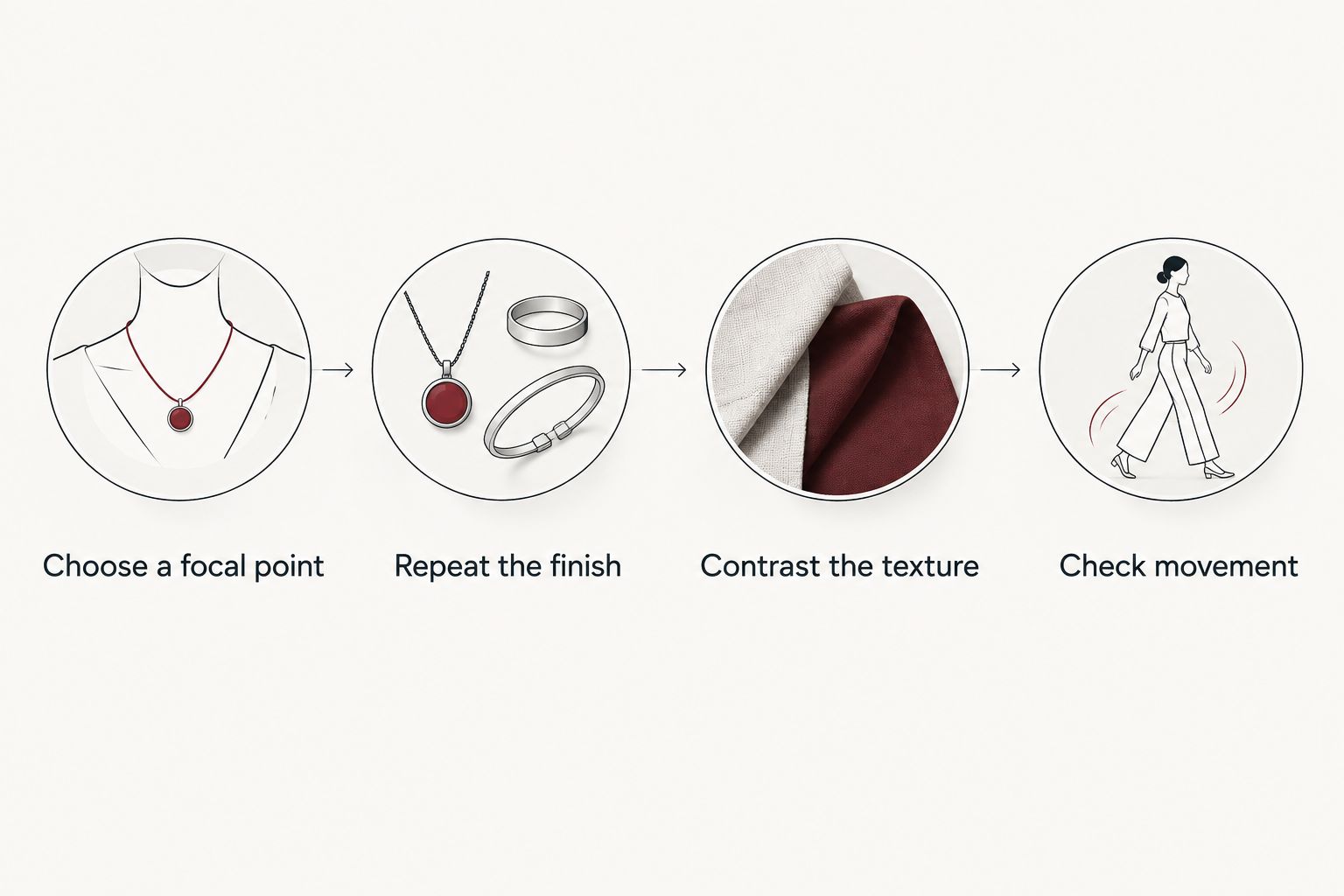
- Choose a focal point: Let the bag, neckline, or hands lead. Keep the remaining accessories quieter.
- Repeat the finish: Connect visible hardware through a shared finish rather than identical shapes.
- Contrast the texture: Put a smooth accessory beside a textured garment, or reverse the relationship.
- Check movement: Sit, reach, and walk in the combination before deciding it works.
With a graphic tee, let the print lead and keep the pendant compact. With a fitted dress, decide whether the waist or neckline needs definition; adding both a prominent belt and a large necklace often obscures that decision. With a hoodie, leave room around the hood and drawstrings.
Try a 3-piece accessory edit: a practical bag, a plain ring, and one optional neckline or face-level accent. This is a styling exercise, not a rule about how many pieces you must own. Remove the optional piece first if the outfit feels crowded.
How the ranking works
This 2026 ranking uses everyday function, proportion, texture, hardware consistency, fit, and styling range. The structured bag leads because it serves a carrying need as well as a visual one. The remaining positions identify distinct styling jobs, not a universal hierarchy of taste.
Dark Aesthetic® dark-luxury outfits benefit from that distinction: statement clothing does not require statement accessories everywhere. A quiet accessory is the better choice when it gives the main garment room to register.
Which dark aesthetic accessories should you choose?
Choose a structured black bag if you want one default recommendation. It has a clear daily purpose and adds shape without relying on symbols. If your existing bag already does that job, start with a plain ring instead.
Build your 2026 accessory edit around the clothes you repeat. Prioritize a compact pendant for graphic tees, a belt for waist definition, or small earrings for detailed necklines. Do not purchase every category simply because it appears in a ranked guide.
FAQ
What are the best dark aesthetic accessories for everyday wear?
A structured black bag is the best overall starting point because it combines daily carry with a defined silhouette. A plain ring, compact pendant, and understated belt cover different styling needs without requiring heavy ornament.
Which dark aesthetic accessory should I choose first?
Choose a structured black bag if your everyday carry needs attention; otherwise, begin with a plain metal ring. The first accessory should solve a real wardrobe need rather than create an obligation to buy more.
What accessories work best with graphic tees?
A compact pendant or plain ring works well with a graphic tee because neither needs to cover the artwork. Keep the pendant away from the central graphic and avoid crowding the neckline.
Do dark aesthetic accessories have to be black?
No, dark aesthetic accessories do not have to be black. Charcoal, restrained metal finishes, and a controlled oxblood or deep-purple accent can support a predominantly black outfit.
Should I match every metal accessory?
No, every metal accessory does not need to match exactly. Repeating a finish is a simple way to establish coherence, while mixed finishes should look deliberate rather than accidental.
How do I keep a dark outfit from looking like a costume?
Give the outfit one clear focal point and keep the supporting accessories restrained. Prioritize proportion, practical fit, and texture over accumulating symbols or decorative hardware.
Are dark sunglasses enough to protect my eyes?
No, dark lenses alone do not establish UV protection. The FDA advises checking the sunglasses' stated UV protection, alongside a comfortable frame fit.
How should I accessorize Dark Aesthetic® clothing?
Accessorize Dark Aesthetic® clothing according to the garment's strongest feature. Keep accessories quiet around statement graphics, use a belt when waist definition is needed, and leave detailed necklines clear.
One last thing
Check your outfit with the bag on, not just in front of the mirror without it. A strap becomes a visible line across the clothing. It can cover the detail you intended to emphasize, making a different carrying position more useful than another accessory.
0 comments